


Little School of Mineralogy – 6
What are sulfides and which compounds also belong to Class II?
Sulfides are natural compounds of sulfur with metals, such as iron, copper, zinc, lead, silver, gold, cobalt and nickel, and with metalloids, such as arsenic, antimony and bismuth.
In addition to sulfides, Class II also includes compounds of the mentioned metals and metalloids with arsenic and tellurium, namely arsenides and tellurides.
How many different mineral species does Class II include and which of them are better known?
The second class includes more than 300 different mineral species, but only around twenty occur in significant quantities.
Well-known minerals from this class include pyrite and marcasite, polymorphic modifications of the FeS2 substance, as well as pyrrhotite, realgar, millerite and around fifteen ore minerals.
What is the significance of sulfide minerals?
Among sulfide minerals are ore minerals of great economic importance, because individual metals and metalloids are obtained through their processing.
The most important ore minerals include copper minerals: chalcocite, chalcopyrite, bornite and covellite; lead: galena; zinc: sphalerite; silver: argentite; mercury: cinnabar; nickel: nickeline; arsenic: arsenopyrite and orpiment; antimony: stibnite, also known as antimonite; and molybdenum: molybdenite.
How were sulfide minerals classified according to the old mining classification?
According to luster, sulfide minerals were divided in the old mining classification into pakovine, sjajnici, blistavci and sinjavci.
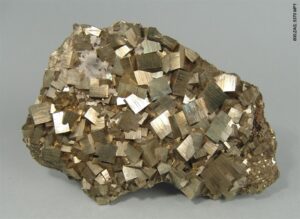
Pakovine have a metallic luster, are opaque, lighter in color with a black streak, mostly of higher hardness, without distinct cleavage and brittle. An example is pyrite – FeS2, known as iron or sulfur pakovina.
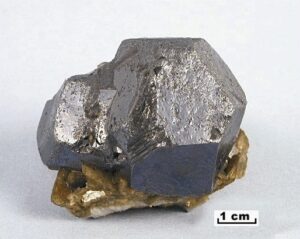
Sjajnici have a strong metallic luster, are opaque, mostly grey in color with a black streak, mostly of low hardness and often with perfect cleavage. An example is galena – PbS, known as lead sjajnik.
PYRITE – FeS2, iron or sulfur pakovina
Bliznečki jarak, Medvednica, Croatia
600:ZAG:7037:MP1
GALENA – PbS, lead sjajnik
Phaffenberg, Neuberg, Germany
600:ZAG:126:MP1
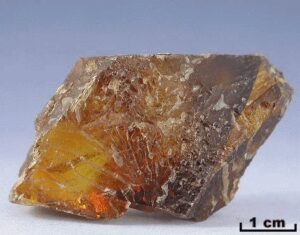
SPHALERITE – ZnS, zinc blistavac
Spain
600:ZAG:149:MP1
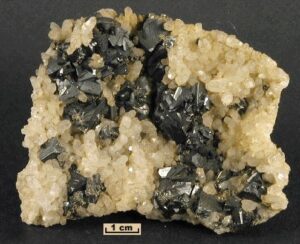
TETRAHEDRITE – (Cu,Fe)12Sb4S13
Cornwall, Great Britain
600:ZAG:259:MP1
Blistavci have a diamond-like luster, are sometimes transparent, mostly of low hardness, with good cleavage, and are brittle. An example is sphalerite – ZnS, known as zinc blistavac.
Sinjavci have a metallic luster, dark grey or bluish colors and a black streak. They are opaque, of low hardness, without cleavage and brittle.
An example is tetrahedrite – (Cu,Fe)12Sb4S13, a mineral that actually belongs to the class of sulfosalts, which was only recently separated from Class II, but at the time when the old mining classification was created, it was considered a sulfide mineral.